In the last few hundred years, the donkey has largely been a symbol of stubborn stupidity. “Jackass” and “ass” are never compliments. In a future blog, I’ll explore where in literature and culture the “ass” became sealed as a symbol of stubborn stupidity. But it wasn’t always so. Donkeys have played fools and prophets, punchlines and martyrs, gloomy philosophers and Grand Canyon heroes. So saddle up for a tour of the most memorable donkeys ever to clop across the page. While reading, consider how the donkey or donkeys you know share some of these traits or others that have not emphasized in literature.
Homer, The Iliad (c. 762 BC)
Stubbornness is not always a bad trait. Homer uses the donkey as a metaphor for the stubborn bravery of the Trojan army:
“And like boys that beat an obstinate ass with sticks, that passing a cornfield ignores their cries and, used to blows, turns in to crop the standing corn until despite their lack of strength they drive him off with difficulty, having eaten his fill; so the proud Trojans and their many allies hung on Ajax’s heels, their spears thudding against his shield, while he at times in fury would bravely turn on them, holding the knot of horse-taming Trojans at bay then retreating again. (Homer, The Iliad, Book XI. Translated by A. S. Kline © Copyright 2009 )
The Ass in the Lion’s Skin — Aesop, Aesop’s Fables (c. 600 BC)
Aesop’s nameless ass finds a lion skin that hunters left out to dry, puts it on, and enjoys a glorious afternoon of watching every creature in the forest flee in terror. Then he gets carried away, lifts his head, and brays. Instantly everyone recognizes him, and his owner gives him a sound beating.
What he symbolizes: The ass in the lion’s skin is the original impostor, a warning about pretending to be something you’re not. In the fables, donkeys were consistently cast as foolish, greedy and prone to poor judgment, and this one became shorthand for anyone who claims a virtue they don’t have. Keep this story in your back pocket, because a certain Narnian donkey will be forced to repeat it some 2,500 years later.
“An Ass, having put on the Lion’s skin, roamed about in the forest and amused himself by frightening all the foolish animals he met in his wanderings.” (George Fyler Townsend translation)
Lucius — Apuleius, The Golden Ass (2nd century AD)
The only Roman novel in Latin to survive complete is, gloriously, about a man who becomes a donkey. Lucius, the golden ass, is a nosy young man obsessed with magic. He sneaks into a witch’s supply of ointment hoping to turn into a bird, grabs the wrong box, and sprouts hooves, a tail and very hairy ears instead. He spends most of the book being stolen, beaten, sold and overworked before a goddess finally restores him.

What he symbolizes: Lucius’s transformation is punishment for recklessness, lust and meddling curiosity. The book cemented the donkey as a symbol of moral humiliation and lack of intellect: lose your self-control, and you lose your humanity along with it.
“I perceived that I was no bird, but a plaine Asse.” (William Adlington translation, 1566)
(Is that not one of the great deadpan lines in literature?)
Dapple — Miguel de Cervantes, Don Quixote (1605)
Here’s a fun fact: Literature’s most beloved donkey has no name. “Dapple” is how English translators usually render el rucio, which means “the gray.” While Don Quixote spent four days inventing the grand name “Rocinante” for his bony old nag, his squire Sancho Panza called his donkey what he was. That tells you everything about the two men.

What he symbolizes: Dapple is the novel’s anchor to reality in a story defined by madness. Don Quixote sees giants in windmills and knights in innkeepers, but nobody can romanticize a plain gray donkey into a mythical steed. Dapple stands for the sturdy, unglamorous truth of peasant life, and for the common man who carries the burdens heaped on him by upper-class delusion. He’s also an economic lifeline. Sancho constantly calculates what the donkey is worth and feels no shame riding him instead of a warhorse, because a slow, sure-footed donkey is more adept on rough Spanish roads.
Above all, Cervantes refuses to treat Dapple as an unfeeling beast of burden. Sancho loves him like family. When Dapple is stolen, Sancho’s wailing is so loud it wakes Don Quixote, and he mourns his donkey as the joy of his children, the solace of his wife and the support of half his household. When the two are finally reunited, the scene is comical but tender:
“Sancho ran immediately to his ass, and embraced him: ‘How hast thou done?’ cried he, ‘since I saw thee, my darling and treasure, my dear Dapple, the delight of my eyes, and my dearest companion!’ And then he stroked and slabbered him with kisses. The ass, for his part was as silent as could be.”
As the writer Antonio Vieira observed, Don Quixote captures the difference between the arrogance and caprice of the horse and the humble steadiness of the donkey. Rocinante gets the fancy name; Dapple gets the hugs. (Don Quixote is not for the faint-hearted, but it’s worth the effort).
Lampwick — Carlo Collodi, The Adventures of Pinocchio (1883)
If you only know the cartoon version, buckle up. In Collodi’s original Italian novel, turning into a donkey is a literal, terrifying moral punishment.
Lampwick (Lucignolo in Italian, sometimes translated as Candlewick) is Pinocchio’s lazy, rebellious classmate, the kid who talks him into running away to the Land of Toys, where there’s no school and every day is play. After five months of pure goofing off, both boys wake up with long, hairy ears. They hide them under caps, eye each other suspiciously, and then dissolve into giggles, right up until the laughter turns into braying and they drop to all fours. Pinocchio is eventually rescued. Lampwick isn’t. He’s sold to a farmer, worked relentlessly, and in the book’s final chapters Pinocchio finds his old friend dying of exhaustion in a stable.
What he symbolizes: Lampwick is a cautionary tale for 19th-century schoolchildren. Collodi uses the donkey transformation as a dark metaphor for what happens when children refuse an education and surrender to pure hedonism: the boys who won’t use their minds end up valued only for their backs. It’s the old “stupid donkey” stereotype used as a lesson, and it hits harder than any lecture about homework.
“My friend must be suffering from the same sickness that I am! I wonder if he, too, has donkey fever?” (Carol Della Chiesa translation)
Platero — Juan Ramón Jiménez, Platero and I (1914)
Three centuries after Sancho smooched Dapple, Spain produced the most tender donkey book ever written. Nobel laureate Juan Ramón Jiménez’s Platero and I is a collection of short prose poems about a poet and his little silver-gray donkey wandering the Andalusian countryside around the town of Moguer. It’s one of the most celebrated works of Spanish literature, and generations of Spanish-speaking schoolchildren grew up reading it.
The poet confides everything to Platero: the beauty of the fields, the cruelty of village life, the children who are poor and sick, the changing seasons. Platero listens, nibbles flowers, trots home and occasionally gets into mischief. Nothing much “happens,” and that’s the point.
What he symbolizes: Platero represents pure innocence, tenderness and an uncorrupted connection to nature. Jiménez lifts the donkey out of the stable and into the realm of art, giving him an almost holy dignity. Where Aesop’s ass is a fool and Lampwick is a punishment, Platero is a symbol of quiet joy who sees both the beauty and the poverty of human life without judging either one.
The book’s famous opening describes him in loving detail:
“Platero is small, hairy, soft; so soft on the outside that you would say he is made all of cotton, that he has no bones. Only the jet mirrors of his eyes are hard, like two beetles of black glass.” (translated from the original Spanish)
Eeyore — A. A. Milne, Winnie-the-Pooh (1926)
And now, the patron saint of overcast days. Eeyore, the old gray donkey of the Hundred Acre Wood, is so famous that his name has become an adjective. If you’ve ever called a coworker “a bit of an Eeyore,” you’ve paid tribute to A. A. Milne.
Eeyore lives in a soggy, thistly corner of the forest, has a tail that keeps falling off (it’s attached with a nail), and expects every birthday to be forgotten. When Pooh and Piglet do remember, Pooh eats the honey he meant to give and Piglet pops the balloon. Eeyore is, somehow, delighted anyway, because he gets to put the burst balloon into the empty honey pot and take it out again.
What he symbolizes: Milne popularized a literary archetype: the melancholy, pessimistic donkey who serves as comic relief among a cast of more naive characters. Pooh is cheerful, Piglet is anxious, Tigger is bouncy, and Eeyore is the realist who sees the gray cloud behind every silver lining. But he’s also strangely lovable. His gloom is a kind of honesty, and his friends never stop including him. Eeyore reminds us that you can be glum and still belong.
“The old grey donkey, Eeyore, stood by himself in a thistly corner of the Forest, his front feet well apart, his head on one side, and thought about things. Sometimes he thought sadly to himself, ‘Why?’ and sometimes he thought, ‘Wherefore?’ and sometimes he thought, ‘Inasmuch as which?’—and sometimes he didn’t quite know what he was thinking about.”
Benjamin — George Orwell, Animal Farm (1945)
If Eeyore is gloom played for laughs, Benjamin is gloom with consequences. In Animal Farm, Orwell flips the “stupid jackass” trope on its head: Benjamin is the wisest, most literate animal on Manor Farm. He can read as well as any pig. He just chooses not to bother.
While the other animals throw themselves into the revolution, Benjamin shrugs. Asked whether life is better now, he answers with a cryptic, stubborn refrain about donkeys living a very long time, adding that none of the others has ever seen a dead donkey. In other words: regimes come and go, and nothing really changes.
What he symbolizes: Benjamin represents the cynical, detached intellectuals who see through propaganda but refuse to speak up. Orwell takes the donkey’s traditional obstinacy and turns it into a tragic flaw. Benjamin is too stubborn and too cynical to believe things can improve, so he stays passive while the pigs seize power, rewrite the rules and betray every ideal of the revolution.
The only time he drops his detachment is the most heartbreaking scene in the book. When his best friend, Boxer the loyal cart-horse, is carted away in a van, Benjamin is the only animal clever enough to read the lettering on its side and realize Boxer is being sent to the slaughterhouse. Benjamin gallops after the van, braying for the others to stop it, but it’s too late. Orwell uses the donkey to deliver the book’s emotional climax, proving that Benjamin was never unfeeling, just bruised by cruelty into silence.
Benjamin’s tragedy is that he was right about almost everything, and it did no one any good. Being clever is not the same as being brave.
Brighty — Marguerite Henry, Brighty of the Grand Canyon (1953)
Time for some sunshine. Marguerite Henry, in Brighty of the Grand Canyon, extols a real-life burro who roamed the Grand Canyon more than a century ago. Brighty was a free spirit who migrated up and down the canyon with the seasons and reportedly hauled water to a North Rim summer camp in exchange for pancakes.
In Henry’s novel, Brighty befriends a kindly old prospector, helps bring the prospector’s murderer to justice, and even carries Theodore Roosevelt along the canyon trails.

What he symbolizes: Brighty is the ultimate subversion of the submissive, lazy farm beast. He belongs to no one, fears nothing and outsmarts the villain. Where Puzzle and Lampwick are dominated by others, Brighty is defined by freedom. He stands for the rugged, unyielding spirit of the American West: independent, loyal on his own terms and impossible to fence in.
Brighty’s legend jumped off the page, too. In 1966, a 600-pound bronze statue of him was installed at the Grand Canyon Lodge on the North Rim, and for decades hikers rubbed his nose for luck before heading down the trail. When the Dragon Bravo Fire destroyed the lodge in July 2025, many feared Brighty was gone. He was found in the rubble, charred and missing an ear, with his front legs broken off, but with his face intact. Stubborn to the last, in the best possible way. Park officials moved him into the museum collection to decide whether he can be restored.
Puzzle — C. S. Lewis, The Last Battle (1956)
Remember Aesop’s ass in the lion’s skin? C. S. Lewis certainly did. In the final book of The Chronicles of Narnia, he takes that ancient fable and turns it into something more unsettling.
Puzzle is a well-meaning but deeply insecure talking donkey who lives with a crafty ape named Shift. Shift bosses him around and has convinced Puzzle that he isn’t clever enough to have opinions of his own. When the two find a lion skin floating in a pool, Shift has a sewing project in mind. He stitches the skin into a costume, forces the reluctant Puzzle into it, and parades him through the twilight as Aslan, the true lion of Narnia, so he can rule the Narnians through a fake god.
What he symbolizes: If Eeyore represents pessimism, Puzzle represents naivety and a lack of self-worth. Aesop’s donkey dresses up out of vanity; Puzzle is pushed into the costume because he’s too humble and easily bullied to say no. He embodies the tragic side of the gullible beast of burden and stands as a cautionary tale about blind obedience, and about how the people who manipulate us often begin by telling us we can’t think for ourselves.
The good news? Unlike Lampwick, Puzzle gets a happy ending. Lewis treats him with real compassion. Puzzle is not wicked, just misled, and in the end he’s welcomed and forgiven. It’s one of the gentlest redemptions in children’s literature, and a reminder that being fooled isn’t the same as being a fool.
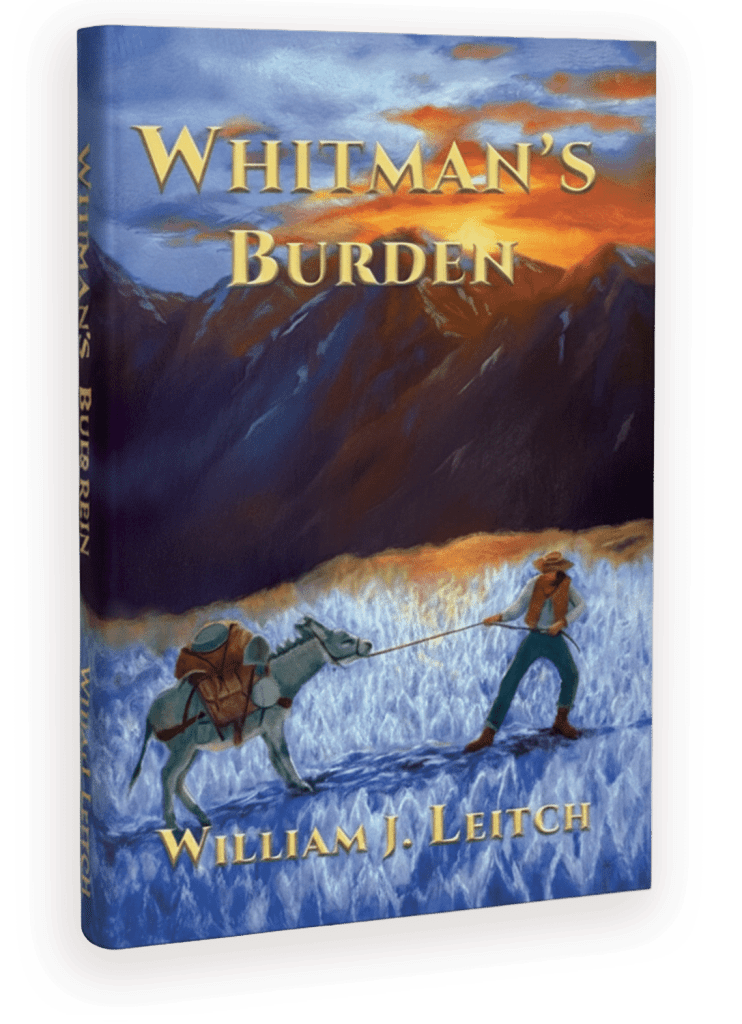
Whitman — William J. Leitch, Whitman’s Burden (2026)

Whitman is a feral jack who is noticed by Levi Grey, a prospector during the Colorado Gold Rush. Levi is impressed with the burro’s bravery in protecting a little girl from a pack of wolves and wants the animal for his pack burro. Levi breaks the burro and gets the strong, loyal beast of burden he was hoping for. But what he wasn’t expecting—and probably didn’t know he needed—was a companion with whom to share his adventures, trials, thoughts, and deepest emotions. The book’s title gives you an idea of Whitman’s importance: Whitman’s “burden” is Levi. The burro carries the man, sometimes literally, and always symbolically.
What he symbolizes: Whitman symbolizes the loyal friend that a burro—or just about any animal—can be to a human in need of an unfailing companion. Whitman shows us that even an independent, rugged prospector needs a soulmate.
The Last Bray
Line them all up and something remarkable appears. The ancient world handed us a donkey who was a fool, an impostor and a punishment. Then, slowly, writers started looking more closely. Cervantes saw loyalty. Jiménez saw innocence. Milne saw a lovable grump. Orwell saw a clear-eyed witness. Henry saw a free spirit. Lewis saw a gentle soul worth forgiving. Leitch saw a best friend. The animal never changed. Our willingness to see it did.
Maybe that’s why donkeys keep wandering into great books. The horse lets a writer show us who we wish we were. The donkey shows us who we actually are: stubborn, burdened, sometimes gloomy, easily fooled, loyal and courageous, and in need of companionship.
So here’s the question I’ll leave you donkey-lovers to chew on, like a thistle in a damp corner of the Forest: What is an attribute—endearing or annoying—of the donkey(s) you know that is not featured in these works of literature? Drop a comment on Facebook.